

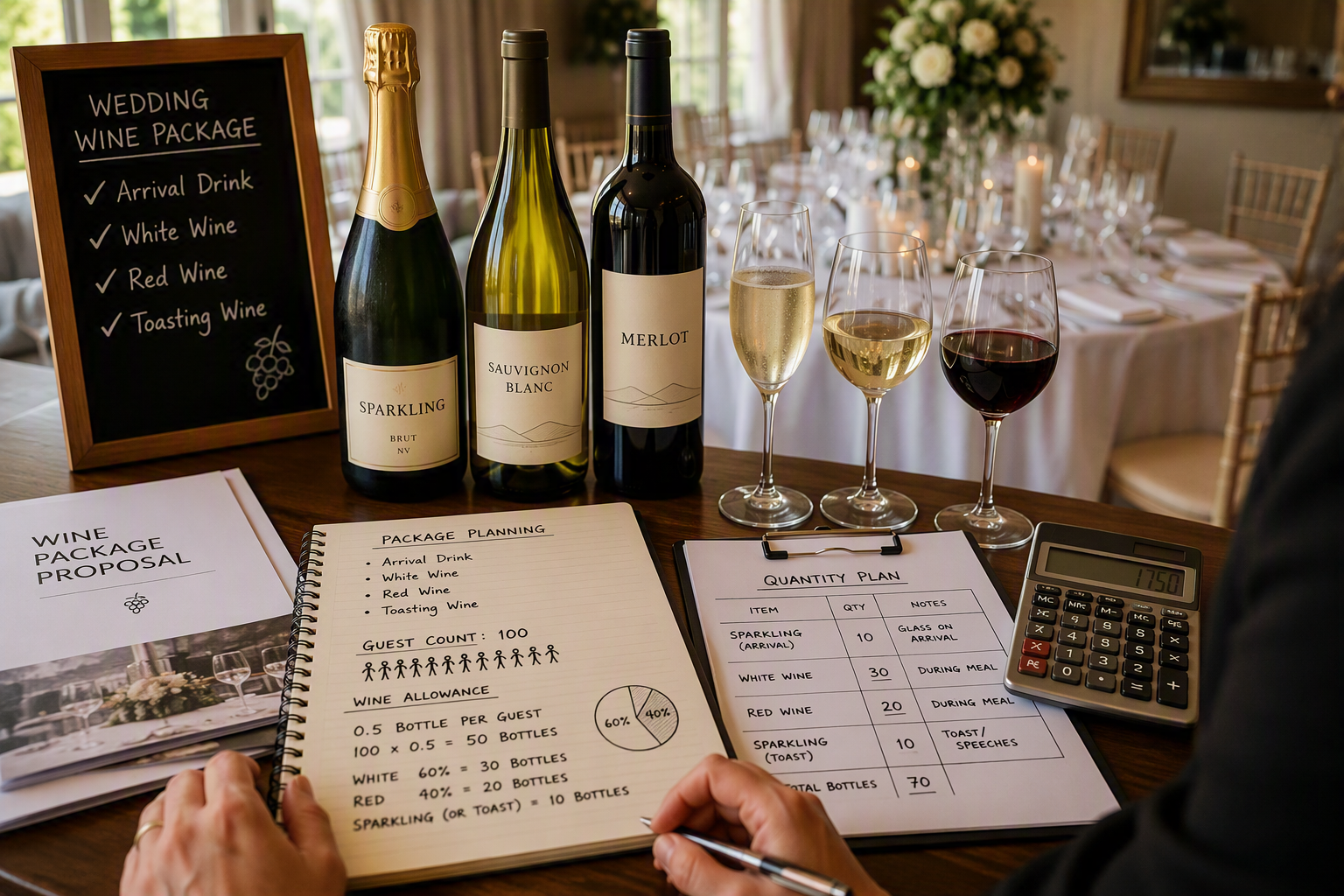
Learn how to build a profitable wedding wine package for your venue, including wine quantities, GP calculations, package structures and practical examples.
If you’re creating a wedding wine package for a venue, start with this principle:
The couple wants simplicity, the venue needs profitability, and the events team needs something that can be delivered consistently.
The best wedding packages achieve all three.
Too much choice can create stock complications, staff confusion and unnecessary costs.
What Should A Wedding Wine Package Include?
Most successful packages follow a similar structure:
Arrival Drink
• Prosecco
• Sparkling wine
• Champagne upgrade
White Wine
• One versatile white wine.
Red Wine
• One approachable red wine.
Toasting Drink
• Prosecco
• Sparkling wine
• Champagne upgrade
Simple packages are often easier to sell and deliver.
How Much Wine Should You Allow Per Guest?
A useful starting point is:
Half a bottle per guest for a 100-person wedding:
100 guests × 0.5 bottle = 50 bottles
A common split might be:
60% white
40% red
Resulting in:
30 bottles white
20 bottles red
Which Wine Styles Work Best For Functions?
The priority is broad appeal.
Wedding service is not usually the place for niche wine styles.
White Wines
Fresh Sauvignon Blanc styles continue to perform strongly because guests understand what to expect.
Chardonnay remains popular where a slightly softer style is preferred.
Red Wines
Spanish Tempranillo often appeals to a broad audience.
Merlot continues to perform well in venues looking for an approachable red.
Shiraz provides a fuller-bodied option for guests seeking something richer.
How Do You Calculate GP On A Wedding Package?
Example:
Wine Cost: £8.00
Package Selling Price: £24.00
Removing VAT:
£24.00 ÷ 1.2 = £20.00
Gross Profit:
£20.00 – £8.00 = £12.00
Gross Profit Percentage:
£12.00 ÷ £20.00 = 60%
Result:
• Cost: £8.00
• Selling Price: £24.00
• GP: £12.00
• GP%: 60%
Should The Cheapest Wine Be The House Option?
Not necessarily. The cheapest wine isn’t always the best value.
A slightly better wine can improve guest experience, simplify recommendations and contribute positively to the overall event.
How Many Choices Should Couples Receive?
One structure that works well is:
Package A
• One white
• One red
• One sparkling wine
Package B
• Premium white
• Premium red
• Premium sparkling wine
Package C
• Higher-end selection
• Champagne option
This keeps decisions manageable while still allowing upgrades.
What Makes A Package Easier To Deliver?
Operational simplicity. Every additional wine:
• creates more stockholding
• increases ordering complexity
• increases training requirements
• increases opportunities for mistakes
Simple packages are generally easier for event teams to execute confidently.
What Do Aberdeen Wedding Clients Usually Prioritise?
In our experience, most couples focus on:
• the venue
• the menu
• the guest experience
• value for money
Wine becomes important once the package is being finalised.
Clear options help venues guide couples through the decision-making process.
Should You Offer Sale Or Return?
For larger functions, sale-or-return arrangements can help manage uncertainty around guest numbers and consumption.
This can remove risk while ensuring sufficient stock is available on the day.
The Most Common Mistake We See
Many venues build wedding packages around cost price alone.
The stronger approach is to balance:
• guest experience
• service simplicity
• stock management
• profitability
The venues that run the smoothest weddings usually keep things surprisingly simple.
Final Thoughts
The best wedding wine package is rarely the most complicated.
A small number of carefully selected wine styles, sensible GP targets and straightforward service delivery will outperform an overly ambitious package in most venues.