

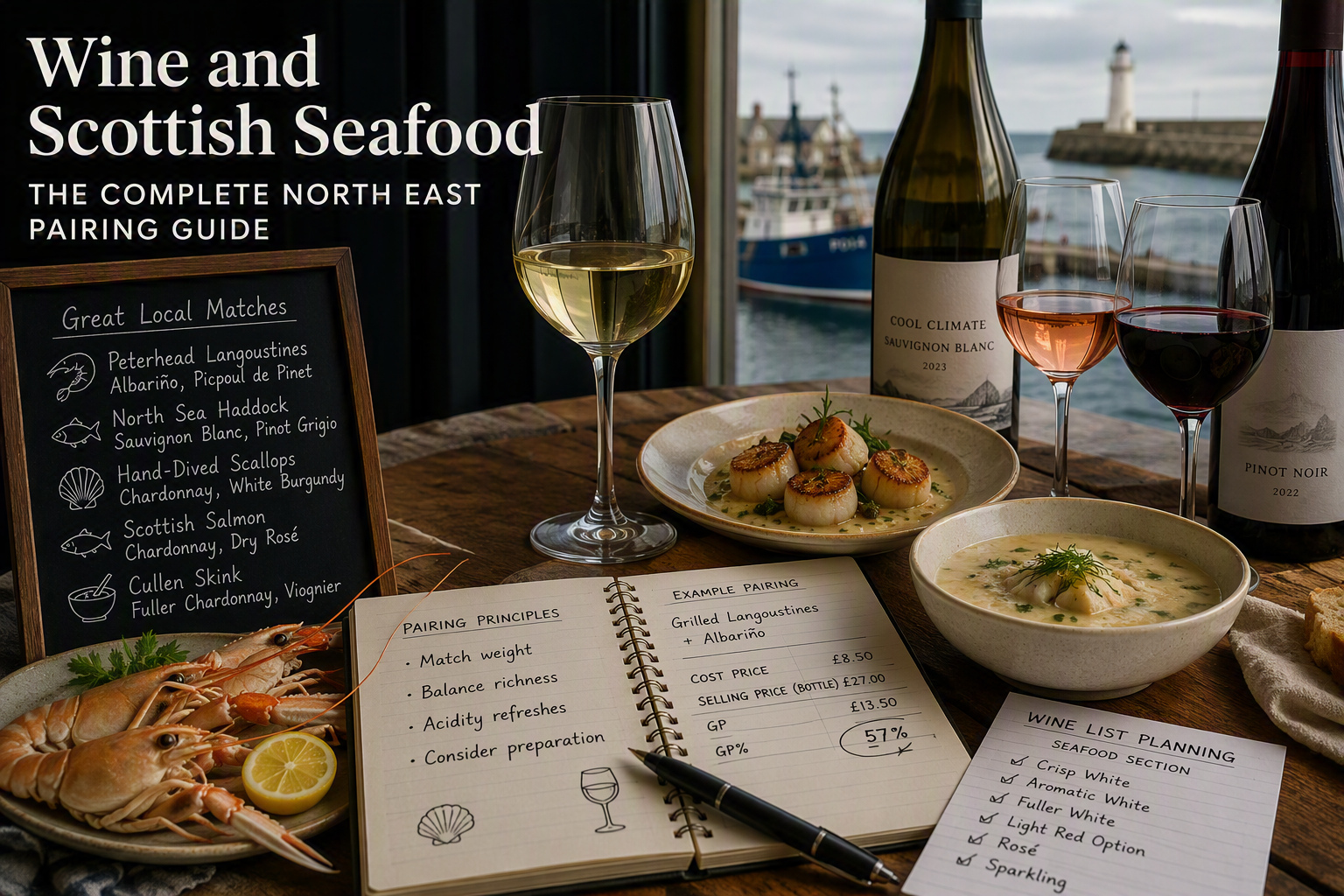
Discover the best wine pairing for Scottish seafood, from Peterhead langoustines and North Sea haddock to hand-dived scallops and Scottish salmon.
If you’re looking for the best wine pairing for Scottish seafood, start by matching the weight and preparation of the dish rather than focusing on the fish itself. A lightly grilled Peterhead langoustine requires a very different wine from a rich Cullen skink or a butter-poached Scottish salmon.
One of the most common mistakes on restaurant wine lists is treating seafood as a single category. In reality, North East Scotland produces an extraordinary range of seafood, and each dish presents a different pairing challenge.
The venues that do this well often find it improves both customer experience and wine sales.
Why Does Scottish Seafood Require A Different Approach?
Seafood from North East Scotland tends to be fresher, cleaner and less heavily seasoned than many imported alternatives.
That means the wine has nowhere to hide.
An overly oaked white wine might dominate a plate of Peterhead langoustines.
A powerful red can completely overwhelm North Sea haddock.
The goal is not to find the most impressive wine.
The goal is to find the wine that makes the dish taste better.
What Makes A Good Seafood Wine Pairing?
A few principles apply almost universally.
Acidity Matters
Fresh acidity helps cut through richness and refresh the palate. This is why crisp white wines frequently perform well with seafood.
Weight Should Match Weight
Light dishes generally pair best with lighter wines. Heavier dishes can carry fuller-bodied styles.
Preparation Is Often More Important Than Species
Grilled salmon, smoked salmon and salmon in a creamy sauce may all require different wines, despite using the same fish. The cooking method matters.
Which Wines Work With Peterhead Langoustines?
Peterhead langoustines are one of the North East’s most valuable seafood products and a fixture on many local restaurant menus. The flesh is naturally sweet and delicate.
The best pairings tend to be:
• Albariño
• Picpoul de Pinet
• Sauvignon Blanc
• Dry, unoaked Chardonnay
These styles provide freshness without overwhelming the shellfish.
What Should You Avoid?
Heavily oaked whites can dominate the dish, and large tannic reds rarely work. The seafood is simply too delicate.
What Wines Pair Well With North Sea Haddock?
Haddock can vary enormously depending on preparation.
Beer-Battered Haddock
For a traditional fish supper or gastropub fish and chips:
• Crisp Sauvignon Blanc
• Pinot Grigio
• Dry Riesling
All work well. The acidity helps balance the richness of the batter.
Grilled Haddock
Meanwhile, a more delicate preparation would allow these styles to shine:
• Albariño
• Muscadet
• Light Chardonnay
What Wine Works Best With Scottish Salmon?
Salmon is one of the most flexible fish on a wine list. Its richer texture creates opportunities for both white and rosé wines.
Grilled Salmon
Good choices include:
• Chardonnay
• Viognier
• Dry rosé
Smoked Salmon
For a classic Scottish pairing, consider:
• Sparkling wine
• Blanc de Blancs styles
• High-acid Sauvignon Blanc
The acidity of these wines complements the smokiness and richness of the fish.
What About Hand-Dived Scottish Scallops?
Scallops are often where restaurant wine lists can really differentiate themselves.
The sweetness of the scallop works particularly well with:
• Chardonnay
• Albariño
• White Burgundy styles
• Premium Loire Valley whites
A scallop dish with a butter-based sauce can comfortably support a fuller-bodied white wine.
A lightly seared scallop may benefit from something fresher.
Again, preparation drives the pairing.
Which Wine Pairs Best With Cullen Skink?
This is where generic seafood advice often falls apart.
Cullen skink is not a delicate seafood dish. It is rich, creamy and deeply savoury.
Something like a light Sauvignon Blanc can sometimes feel overwhelmed, so instead, consider:
• Fuller-bodied Chardonnay
• White Rhône styles
• Richer Viognier
These wines have enough texture to cope with the soup’s richness.
Can Red Wine Ever Work With Seafood?
Yes. Absolutely.
The old rule that seafood must always be paired with white wine is just too simplistic.
Several seafood dishes work surprisingly well with lighter reds. Examples include:
Tuna
• Pinot Noir
• Gamay
Rich Salmon Dishes
• Light Pinot Noir
• Elegant Grenache
Tomato-Based Seafood Stews
• Lighter Mediterranean reds
The key is keeping tannins under control.
Heavy red wines do remain difficult partners for most seafood dishes.
How Should Aberdeen Restaurants Build A Seafood Wine List?
Many venues try to solve seafood pairings by offering an enormous selection of white wines.
In practice, a focused list often works better.
A useful structure might include:
One Crisp White, for:
• Langoustines
• Oysters
• White fish
One Aromatic White, for:
• Salmon
• Asian-inspired dishes
• Spiced seafood
One Fuller-Bodied White, for:
• Cullen skink
• Scallops
• Rich seafood dishes
One Versatile Rosé, for:
• Seasonal menus and summer service.
This approach keeps ordering simpler while still providing genuine choice.
Which Pairings Sell Best In North East Scotland?
After decades supplying venues across Aberdeen and Aberdeenshire, one pattern appears repeatedly.
Customers are far more willing to accept guidance on wine with seafood than with red meat.
Many seafood diners genuinely want a recommendation.
That creates an opportunity.
When your staff can confidently recommend a wine alongside a dish, average spend often increases naturally.
The recommendation does not need to be complicated.
It simply needs to be clear.
How Can My Staff Sell More Wine With Seafood?
A less effective example:
“Would you like some wine?“
More effective:
“Quite a few guests order our crisp Spanish white with the langoustines. It works really well.“
The second approach feels helpful rather than sales-focused, whilst also giving staff confidence.
The Most Common Mistake We See
One mistake appears again and again.
A venue invests heavily in sourcing excellent local seafood but gives very little thought to the wines listed alongside it.
The result is often a mismatch.
Great seafood. Ordinary wine list.
The venues that perform best tend to think about both together.
A strong pairing can elevate the entire dining experience and create additional revenue without increasing food costs.
Should Every Seafood Dish Have A Recommended Wine?
Not necessarily, but your team should know the answer if a customer asks.
That often matters more than printing a recommendation on the menu.
Simple staff training usually delivers a greater return than adding paragraphs of tasting notes to the wine list.
Final Thoughts
Scottish seafood deserves more thought than the traditional “fish equals white wine” approach.
By considering weight, preparation and flavour, venues can build pairings that improve the customer experience and increase wine sales at the same time.
For restaurants, bars and hotels across Aberdeen and Aberdeenshire, seafood remains one of the biggest opportunities to showcase both local produce and a well-constructed wine list.