

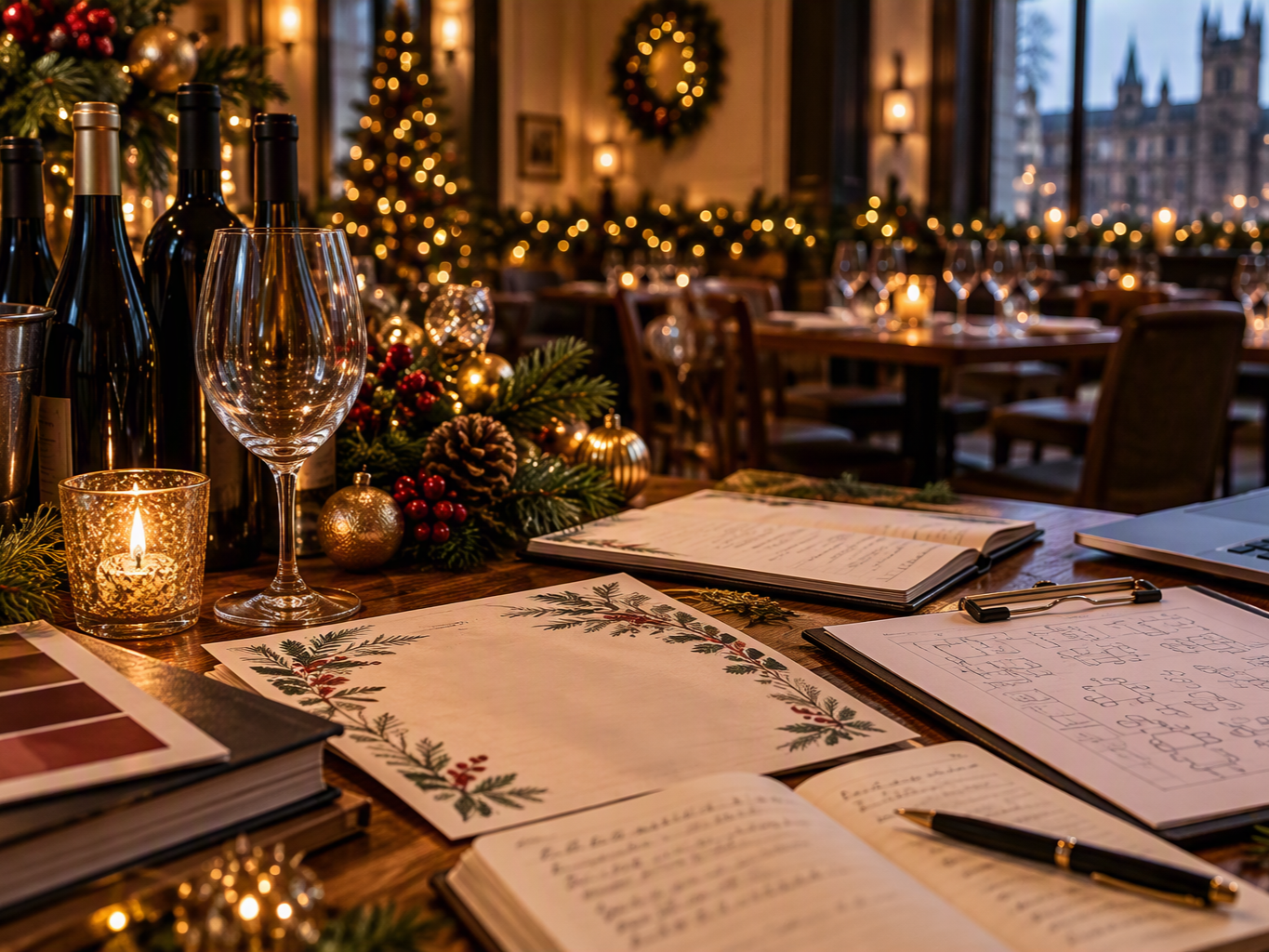
Planning your Christmas wine offer for a restaurant? This practical timeline helps Aberdeen venues get pricing, stock and menus right before December.
If you’re searching for advice on christmas wine planning restaurant strategies, the biggest mistake is leaving decisions until November. By then, menu printing deadlines are looming, festive bookings are building and everyone is competing for the same supply chain capacity.
The venues that tend to have the smoothest December are not necessarily the ones with the largest wine lists. They’re the ones that start planning early, price sensibly and build an offer that works operationally as well as commercially.
Whether you’re running a city-centre restaurant in Aberdeen, a gastropub in Inverurie or a seafood-focused venue in Stonehaven, a structured approach can help you avoid last-minute headaches and protect your margins during one of the busiest trading periods of the year.
Why Should Christmas Wine Planning Start Earlier Than You Think?
Christmas bookings often arrive in waves.
Corporate events, family gatherings and festive lunches can significantly increase demand within a short period.
Wine planning is about more than simply ordering additional stock. You need to consider:
• Which wines complement your Christmas menu
• Expected guest numbers
• Glass and bottle pricing
• Staff confidence when making recommendations
• Menu printing deadlines
• Storage capacity
• Stock availability during peak trading
A venue that normally serves 40 covers on a Tuesday may suddenly be serving 90 during December. Without good planning, it’s easy to either run out of key styles or tie up cash in stock that doesn’t move.
August and September: What Should You Be Deciding?
Which wine styles fit my Christmas menu?
Start with the food rather than wine.
For example:
• Venison dishes often work well with medium to full-bodied reds.
• Roast turkey can suit lighter reds or fuller-bodied whites.
• Peterhead smoked salmon starters often pair well with crisp, high-acidity whites.
• Aberdeen Angus beef dishes typically support structured red wines.
At this stage, focus on categories rather than specific products.
Ask yourself:
• Do we need a richer white alongside our house option?
• Is there a premium red choice for festive celebrations?
• Do we have a suitable sparkling option?
• Are there alcohol-free alternatives for drivers and business lunches?
Are my pricing targets realistic?
Before finalising a wine list, work backwards from your GP target.
For example:
• Bottle cost: £8.00 ex VAT
• Selling price: £28.00
• Gross profit: £20.00
• GP percentage: 71.4%
For a by-the-glass option:
• Bottle cost: £7.00 ex VAT
• 4x 175ml servings
• Revenue per bottle at £7.50 per glass: £30.00
• Gross profit: £23.00
• GP percentage: 76.7%
Running these calculations early helps avoid uncomfortable price increases later.
October: How Should You Finalise the Offer?
Which wines actually deserve a place on the list?
Christmas isn’t the time for a complicated wine list. Most guests want confidence and clarity rather than endless choice.
Many successful Aberdeenshire venues reduce complexity by focusing on:
• A reliable house range
• One or two premium upgrades
• A festive sparkling option
• A food-pairing recommendation for key menu items
This approach makes ordering easier for guests and service simpler for staff.
Can my team confidently recommend the wines?
A lengthy tasting note isn’t much use during a busy Saturday service. Instead, train staff with practical language.
Examples include:
• “This works particularly well with the venison.”
• “If you’re having the beef, I’d suggest this red.”
• “This is our most popular white with seafood dishes.”
Simple recommendations often outperform technical wine terminology.
November: What Needs Confirmed Before Menus Go to Print?
Have you checked your projected stock requirements? Look at historical trading where available.
Review:
• Number of festive bookings
• Average bottle sales per cover
• Glass sales trends
• Premium wine performance
For example, if last December saw 200 bottles of red wine sold and bookings are already tracking 15% ahead, ordering only 200 bottles could create unnecessary risk.
The aim is not to overstock. It’s to make an informed estimate.
Have you considered your premium opportunities?
Christmas is one of the few periods where guests are often more willing to trade up.
That does not mean dramatically increasing prices. It means making sure you offer clear upgrade options.
For example:
• Standard sparkling option
• Premium sparkling option
• Entry-level red
• Premium festive red
• House white
• Premium seafood-friendly white
A well-structured ladder of choices can increase average spend without creating pressure for guests.
December: What Should You Monitor During Service?
Which wines are selling faster than expected?
Monitor stock weekly, and sometimes daily during the busiest periods.
Stock issues become particularly problematic during the final two weeks before Christmas when replacement options may be more limited.
Keep a close eye on:
• House wines
• Festive menu pairings
• Sparkling wines
• Large-party favourites
Are customers following your pairing suggestions?
One useful exercise is speaking to front-of-house staff each week.
Questions worth asking include:
• Which recommendations are working?
• What are guests ordering?
• Which wines are proving easiest to sell?
• Are there any styles guests keep requesting?
These insights often become valuable planning information for next year’s festive season.
Why Local Knowledge Matters at Christmas
The hospitality market in Aberdeen and Aberdeenshire isn’t identical to other parts of the UK.
A harbour-side seafood restaurant in Stonehaven faces different challenges from a rural hotel near Huntly. Likewise, an Aberdeen city-centre restaurant hosting corporate Christmas parties may see different purchasing patterns from a village gastropub.
Understanding local trading patterns, menu trends and customer expectations helps create a Christmas wine offer that suits your venue rather than a generic national template.
The goal isn’t the biggest wine list or the most expensive wines. It’s having the right wines available at the right prices, supported by a team that can confidently recommend them during your busiest trading period.